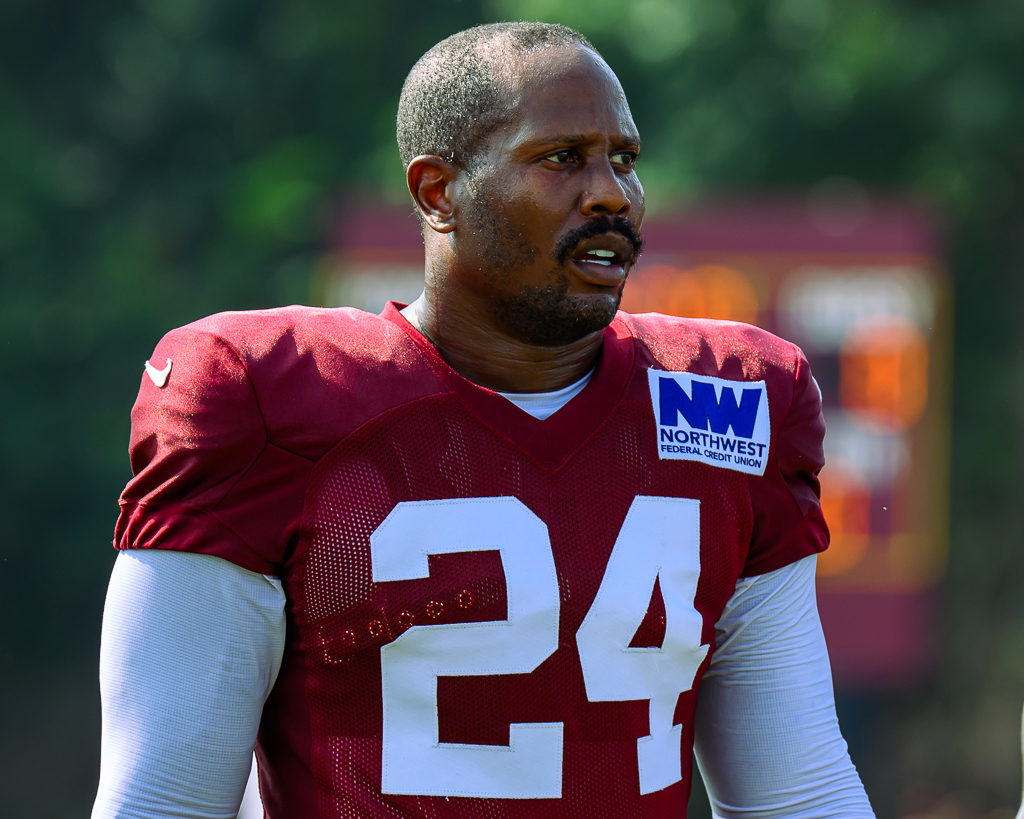
Von Miller: Two Titans, Two Legacies, One Intriguing Name
In the vast tapestry of human achievement, some names resonate with distinct power, embodying excellence in their respective fields. While the name "Miller" is common, the addition of "Von" elevates it, conjuring images of impact, innovation, or sheer dominance. This article delves into the fascinating, albeit coincidental, intersection of two such figures: Von Miller, the electrifying NFL linebacker, and Oskar von Miller, the pioneering German engineer whose legacy, like a complex mechanism, continues to be re-examined and refined. Despite living centuries apart and operating in vastly different arenas, both men have left indelible marks on their worlds, inspiring awe and, in one instance, prompting a profound reevaluation of history.
Von Miller: The Gridiron Dominator and Modern Icon
When sports enthusiasts hear the name Von Miller, they immediately picture a blur of speed and power, a quarterback's worst nightmare. At 36 years old, the Dallas-area native has carved out an illustrious career in the National Football League, leaving an unmistakable imprint on every team he's played for. His journey from Texas A&M, where he earned consensus All-American honors and the prestigious 2010 Butkus Award as the nation's top linebacker, to becoming a two-time Super Bowl champion, is a testament to his exceptional talent and relentless work ethic.
Miller’s career highlights read like a blueprint for defensive dominance:
- NFL Draft: Selected second overall by the Denver Broncos in 2011, quickly establishing himself as a defensive force.
- Super Bowl 50 MVP: His performance in Super Bowl 50, where he harassed Carolina Panthers quarterback Cam Newton and forced two crucial fumbles, cemented his place in NFL lore. This was a defining moment, showcasing his ability to single-handedly alter the course of a championship game.
- Two-Time Super Bowl Champion: Adding a second ring with the Los Angeles Rams in Super Bowl LVI, proving his ability to adapt and contribute to winning cultures across different franchises.
- Eight-Time Pro Bowl Selection: A consistent measure of his sustained excellence and recognition as one of the league's premier defensive players over a decade.
- Three-Time All-Pro Selection: Further solidifying his status among the elite.
Beyond the statistics, Von Miller is renowned for his signature pass-rushing moves, his infectious energy, and his leadership both on and off the field. Having spent significant parts of his career with the Denver Broncos, Los Angeles Rams, and Buffalo Bills, he most recently donned the uniform of the Washington Commanders, continuing to provide valuable veteran presence. As he navigates the "autumn of his NFL career," as some might describe it, his influence remains undeniable, reminding fans and aspiring players alike of what it takes to thrive at the highest level of professional sports. His recent appearance at the Houston Rodeo, performing the iconic "hat drop" to kick off the calf scramble, showcases a public figure who remains connected to his Texan roots and engages with his fanbase beyond the gridiron. For more on his incredible journey, explore Von Miller's Storied NFL Career: Super Bowls, Butkus Award, & Rodeo.
Oskar von Miller: Architect of Innovation and Cultural Heritage
Shifting gears from the modern football field to early 20th-century Germany, we encounter Oskar von Miller, a name synonymous with engineering prowess and a visionary approach to public education. Born in 1855, Oskar von Miller was a pivotal figure in Germany's industrial and scientific development. A distinguished civil engineer, he was instrumental in monumental projects that shaped the landscape and future of Bavaria.
One of his most significant engineering feats was his substantial involvement in the construction of the Walchenseekraftwerk (Walchensee Hydroelectric Power Station). This pioneering hydroelectric plant, an engineering marvel of its time, harnessed the power of water to generate electricity, a crucial step in electrifying a rapidly industrializing nation. His work as an electrotechnician and hydropower pioneer laid foundational groundwork for modern energy infrastructure.
However, Oskar von Miller is perhaps best known globally for his role as the founder of the Deutsches Museum in Munich. For over a century, he was celebrated as the sole architect of this world-renowned institution, a beacon of science and technology education. The museum, which finally opened its doors on Museumsinsel in 1925 after years of meticulous preparation, remains one of the largest and oldest science and technology museums globally, attracting millions of visitors annually. In Munich, his legacy is further cemented by a street and a gymnasium bearing his name, enduring tributes to his contributions to the city's development and intellectual life.
The Unsung Hero: Arthur Schönberg's Crucial, Overlooked Role
While Oskar von Miller's achievements are undeniable, recent historical investigations have unveiled a crucial and tragically overlooked narrative: the indispensable role of Jewish engineer Arthur Schönberg in the founding of the Deutsches Museum. For decades, Schönberg's contributions were systematically erased, a stark reminder of the devastating impact of historical revisionism and antisemitism.
Arthur Schönberg, a cousin of the famous composer Arnold Schönberg, was far more than a mere assistant. According to historian Wilhelm Füßl, former head of the museum's archives, Schönberg was the "secret co-founder" of the Deutsches Museum. His involvement dates back to 1903, when he became a member of the newly established museum committee. As the scientific collection manager, his responsibilities were immense and critical to the museum's formation:
- Acquisition of Key Collections: Schönberg was responsible for acquiring numerous significant objects, including the invaluable Kobell photographs, which are recognized as some of the earliest photographs ever taken in Germany.
- Engineering Contributions: While working in von Miller's planning office, Schönberg even drew the plans for the Walchenseekraftwerk, the very project for which Oskar von Miller is so highly lauded. This detail alone underscores the depth of his technical and intellectual contributions.
Despite his undeniable successes and crucial role, Schönberg became an early target of antisemitic attacks. Füßl's research highlights examples from the museum's personnel files from 1907 and 1908, which contained vitriolic complaints like, "The direction of the Deutsches Museum is run by a Polish Jew." These accusations escalated, including false charges of embezzlement, all of which Füßl confirms as untrue. The rise of Nazism brought unimaginable horrors. Schönberg was excluded from the museum committee in 1934 and, following the November Pogroms (Kristallnacht) in 1938, he was arrested and sent to Dachau concentration camp. He refused to emigrate, believing his extensive contributions and distinguished service would protect him – a tragic misjudgment of the totalitarian regime's cruelty.
In June 1942, Arthur Schönberg and his severely ill wife, Eva, were deported to the Theresienstadt Ghetto. Eva succumbed to her illness on December 23, 1942, and Arthur Schönberg died just weeks later on February 20, 1943. Füßl, whose research is now published in a book, argues passionately that Schönberg deserves "a monument in the front row." His daughters and a grandson eventually succeeded in securing compensation claims through a lengthy legal battle, a small measure of justice for a life and legacy so unjustly silenced. For a deeper dive into this vital historical correction, read Deutsches Museum: Uncovering Arthur Schönberg's Hidden Co-Founding Role.
Reflecting on Legacy and Recognition
The stories of Von Miller and Oskar von Miller, particularly when illuminated by the tragic omission of Arthur Schönberg, offer profound insights into the nature of legacy, recognition, and historical truth. Von Miller's career is a testament to individual athletic excellence and the power of sustained performance in a highly competitive modern arena. His impact is immediate, celebrated, and widely documented in real-time.
Oskar von Miller's legacy, while monumental in its own right, now carries the weight of a complex historical revelation. It reminds us that even the most celebrated narratives can be incomplete or, worse, deliberately skewed. The story of Arthur Schönberg underscores the critical importance of historical inquiry, of giving voice to the voiceless, and of rectifying past injustices. It is a powerful lesson that true progress, whether in engineering, sports, or cultural preservation, is often a collective effort, and that every contributor deserves their rightful place in history.
While the NFL star and the German pioneer share a strikingly similar name, their paths converged only through the twist of language. Yet, in exploring their individual contributions, we uncover universal themes of ambition, innovation, and the enduring human quest for recognition and justice.